Missing Teeth Treatment Planner
Mark the teeth you are missing on the chart and the tool shows which treatment is normally used for that pattern — a single implant, an implant bridge, or a full fixed arch.
Missing Teeth Treatment Planner
Mark the teeth you are missing on the chart and the tool shows which treatment is normally used for that pattern — a single implant, an implant bridge, or a full fixed arch.
This maps a pattern to the usual treatment. It is not a diagnosis: bone volume, gum health and your bite change the answer and can only be judged from an examination.
How to read the result
- Missing teeth next to each other are usually cheaper to replace than the same number scattered around the mouth — one bridge can span a gap that would otherwise need three implants.
- How long a tooth has been missing matters as much as how many: bone shrinks where it is not loaded, and a gap left for years is the most common reason a graft is needed.
- Take a screenshot of your chart and send it with your enquiry. It is the single most useful thing a clinic can have before seeing your scan.
Frequently asked questions
Do I need one implant for every missing tooth?
No, and assuming so is the most common reason people overestimate the cost. Two implants routinely carry a three-unit bridge, and an entire arch of twelve to fourteen teeth is carried by four to six. One implant per tooth is normal only for isolated single gaps. This is also why the pattern of your missing teeth matters more than the count: four gaps in a row cost far less to close than four gaps spread around the mouth.
What happens if I leave a gap for years?
Three things, and all of them make later treatment harder. The bone that held the root is no longer loaded and slowly shrinks, which is the usual reason a graft becomes necessary. The teeth beside the gap drift into it and the opposing tooth grows down towards it, so the bite has to be corrected before anything can be placed. And the longer both go on, the more likely the final result needs orthodontic work first. None of it makes treatment impossible; it makes it longer and more expensive.
Can I get implants if I have gum disease?
Not until it is treated and stable, but that is a delay rather than a refusal. Implants sit in the same bone that periodontal disease destroys, and placing one in an actively infected mouth is the clearest predictor of failure there is. A reputable clinic will treat the gums first, wait, re-measure, and only then plan implants. If a clinic offers to place implants at the same appointment as extractions in a mouth with untreated gum disease, treat that as a warning about the clinic rather than good news about your case.
Related guides

Types of Dental Implants: Brands, Materials, and What Sets Them Apart
Understand dental implant types, materials, and brands in Turkey. Learn what matters for long-term results and how to compare clinic quotes.
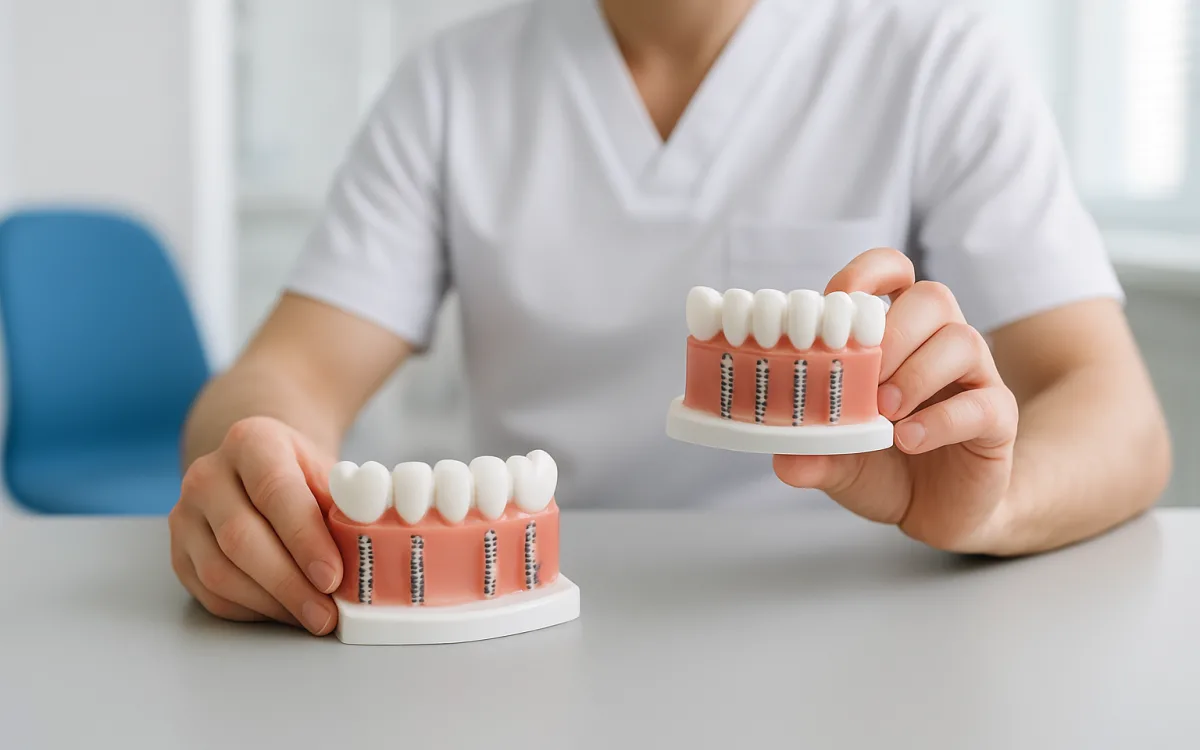
All-on-4 vs All-on-6: Comparing Full Arch Dental Implants in Turkey
A clear, practical guide to All-on-4 and All-on-6 dental implants in Turkey, with costs, pros, cons, and what each option means for your trip.
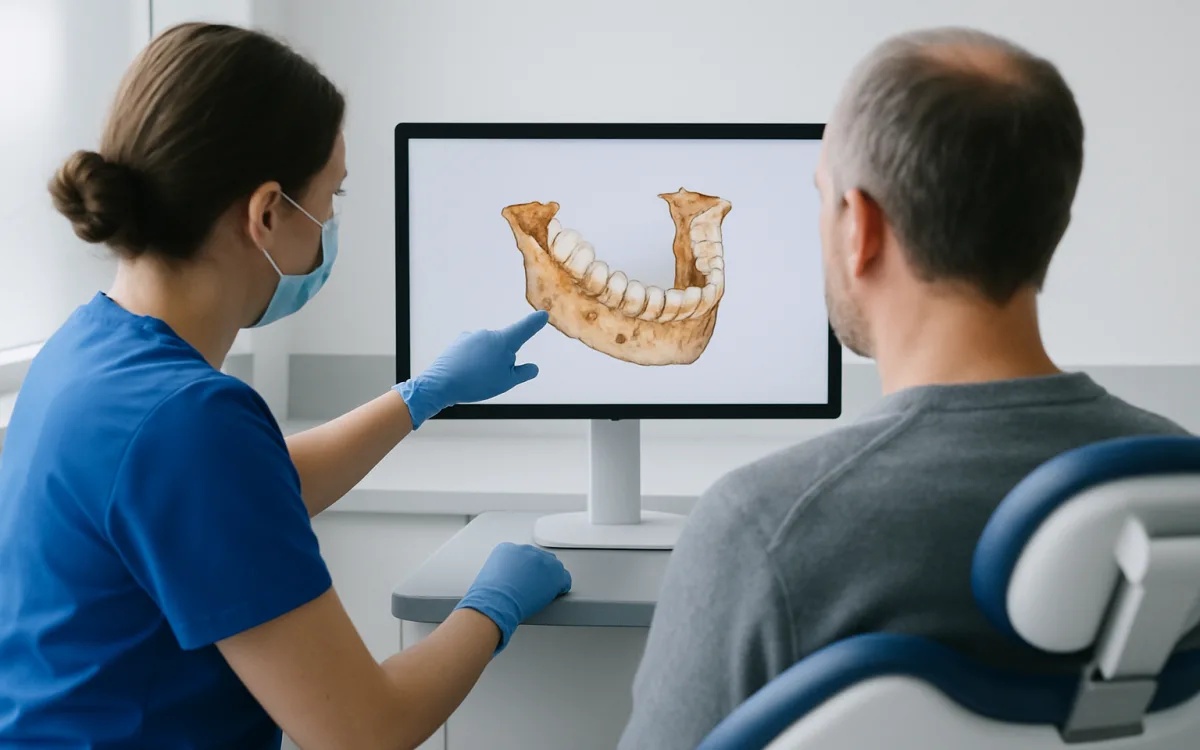
Bone Grafting and Sinus Lift: What to Know Before Dental Implants in Turkey
Understand bone grafting and sinus lift procedures for dental implants in Turkey, including healing times, types, and extra costs.
Why ask us for the quote
- One enquiry, quotes from several vetted clinics — you compare, nobody pressures you.
- We ask for the information a clinic actually needs to quote: no photo or X-ray upload.
- Every clinic on our list holds a Turkish Ministry of Health licence and treats international patients.
- You keep your language: we pass on which of the 12 languages you want to be answered in.
- No fee to you, ever. Clinics pay us, and that is written on this page rather than hidden.
- We are not a clinic and never treat anyone — so we have no reason to talk you into surgery.